







|
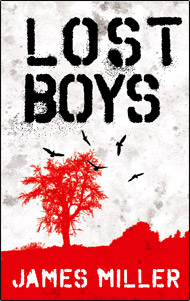
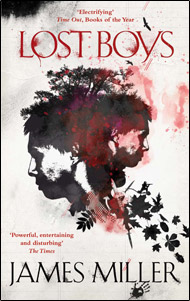
After the oil company that employs Arthur Dashwood fails to protect him from a kidnap attempt in Baghdad, he returns to his traumatised family in London. But everything is not as it should be. Having quit the blistering heat and swimming-pool luxury of Saudi Arabia for fear of terrorist attack, Arthur finds that the danger is closer to home.Arthur's young son Timothy is struggling in the hostile terrain of his new public school. Bullied by other pupils and neglected by his preoccupied parents, he withdraws into a fantasy world, a hybrid of computer-generated guerrilla warzone and exotic dreams of his time in Saudi Arabia, a place where boys can fight and escape their teachers and families. As one middle-class boy from Timothy's school and then another disappears, so evidence emerges of an extreme and disturbing rejection of the adult world. And then it is Timothy's turn to disappear. Haunted by memories of post-Saddam Baghdad, Arthur embarks on a terrifying search for his son, one that will reveal his own complicity in the brutal consequences of Western power. An apocalyptic fable and gripping geopolitical thriller, Lost Boys evokes a society on the brink of disintegration, dangerously paranoid and utterly recognisable. It is a novel of exceptional intelligence and imagination and an extraordinary debut. "Subject matter is essential in fiction and Miller magnificently fulfils this requirement. He is a formidable writer." Beryl Bainbridge Watch James Miller talk about Lost Boys Order copies from Amazon.co.uk Order copies from Waterstones The genesis of Lost Boys comes from a short story, Dreams of the Lost Children, which I wrote in 2003. Read the story here (PDF format, 34kb). TIME OUT magazine have chosen James Miller as one of their Rising Stars of 2008. Reviews 'At the heart of James Miller's first novel is the shocking theme of missing children: images of abandoned, abused, ghostly children soak the settings, invading the characters' dreams, their waking visions, filling up the book's streets, its corridors, its schools and barricaded homes. This imagery has a global width and depth. Miller disturbingly juxtaposes the desperate plight of homeless children in the Middle East with the trapped, closeted, joyless lives of public schoolboys in a warped version of contemporary Britain. The novel is a mélange of many different genres, blending sci-fi, horror and thrillerish elements. But for all its textual complexity, in essence it is two distinct narratives: a rites-of-passage story about a bullied public schoolboy who disappears; and his father's desperate search for his son and some sort of meaning in our postmodern world. The father's story kicks off the novel in dramatic fashion. Arthur Dashwood, an oil executive, is kidnapped in Baghdad and traumatised by the experience. Miller's camera-like prose then focuses on Arthur's son, Timothy, who is being bullied at his miserable public school. Finding no real comfort from his distressed father and his neurotic mother, the over-protected Timothy seeks release by playing violent interactive computer games, imagining that he is fighting in the Middle East. His pain is exacerbated when a boy goes missing at his school: he is questioned by the police and subtly blamed by the pupils for the boy's disappearance - until he too goes missing. Switching to the perspective of the father, we find him listening to tapes of people being interviewed about the disappearance by a private detective, as Miller draws the reader into a nightmarish, surreal world. This is a novel that makes the reader think about what we are doing to boys in this society. A powerful, entertaining and disturbing read.' The Times 'The disappearance of a child is the worst nightmare for any parent, prompting the direst forebodings. James Miller draws upon these fears for his debut novel, to create an allegory for the terminal state of Western civilisation as a whole... His dream-like fable works well and he delivers a strikingly imaginative and tightly written story with wider resonances. Its bold appropriation of global politics places it within the everyday debate which questions the extent to which the desire to control resources and maintain hegemony drives foreign policy in the northern hemisphere.' The Independent 'James Miller has already been declared one of "London's rising stars", and the central vision of his first novel, The Lost Boys, is wonderfully striking. As a pitch for the long-awaited Big Novel on the psychosocial deformations of Iraq and the war on terror, it knocks the imaginative spots off Saturday. You will stay haunted for days by the image of a London in which prepubescent, middle-class young Wasps start to disappear of their own free will to join a mysterious, global and murderous anti-western insurgency.' The Guardian 'You certainly couldn’t ask for a more topical novel than James Miller's electrifying debut. It trawls the culture for our biggest fears and preoccupations – missing children, teen gangs, Iraq, the widening gap between rich and poor, ultra-violent computer games – and blends them into a speculative fable pitched somewhere between JG Ballard and John Buchan, to whose schoolboy orientalism it pays ironic homage." Time Out 'James Miller's ambitious and unusual first novel draws on two powerful modern fears: terrorism and child abduction.' The Telegraph 'Imagine Peter Pan from the perspective of Wendy's parents. Now, imagine that what is happening to your children is not participation in a fanciful attempt to stem the quick evaporation of innocence but the rallying of an army of disaffected youth. This is what James Miller is portraying in his Ballardian dystopia of the near future: JM Barrie's fable with a terrifying new sociological context. Scores of young boys are disappearing in an apparent revolt against Western civilisation, and when it happens to the son of a wealthy London businessman, Arthur Dashwood is forced to confront his complicity in the creation of the culture of fear and consumerism that his child seeks to escape. Sleek and shocking, this is highly intelligent cultural criticism.' Waterstone's Quarterly 'James Miller's promising debut is... hugely imaginative.' Daily Mail 'A tense and thoughtful fantasy novel' The Observer 'Just when it seems as if male debut novelists are going to write angst fests about fear of commitment forever, along comes a writer like James Miller who makes reading seem essential again. Set among London's wealthy middle class, his novel sees Arthur Dashwood hunting for his missing son, in an imaginative, punchy and terrifying take on Peter Pan.' The London Paper "This is a genre-defying debut. It casts a spell." The Scotsman 'Zeitgeist fiction that isn't pretentious' Word 'This is a novel about Western complicity in its own malaise, and also about the deracinated, joyless life of the English teenager... Miller's prose is elegant and assured.' Literary Review 'With distinct echoes of Ballard and Golding, and direct nods to Peter Pan, Miller offers a bleak vision of recognisable affluent Londoners whose sons are mysteriously disappearing... Miller is excellent in his depiction of the Dashwood's strained relationship and Arthur's emotional distress as well as in evoking the uncomfortable mixture of material pride and urban paranoia that haunts the book's supposedly successful adults... Lots of interesting ideas are thrown up as the affluent west collides with the hushed up brutality of the third world... Lost Boys certainly keeps the pages turning.' Cherwell 'A tautly-written and engrossing contemporary fable'. Evening Herald, Ireland 'James Miller's ferociously clever first novel combines elements of science fiction, fantasy, children's literature and political thriller' London Review of Books - Recommended Titles 'This interesting novel has a surprising ending. This seems to be Miller's first novel – brilliant!' Bradford Telegraph 'Less Peter Pan than Lord of the Flies; it's a complex book which mixes together many voices and genres, including elements of Ballardian fantasy, and comments obliquely on the media's treatment of missing children, the encroaching surveillance society and the Iraq War.' Herald |
||||||||||